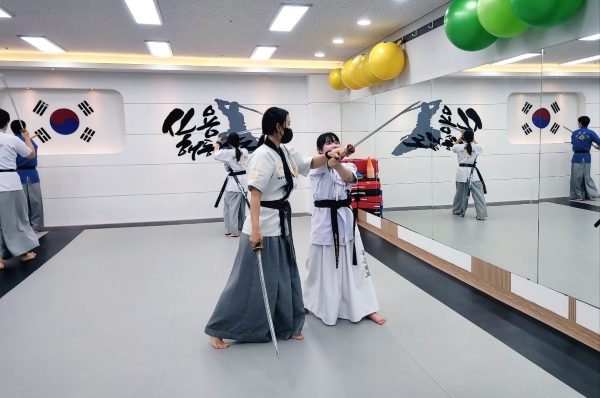
Haedong Kumdo Programs:
Youth Swordsmanship: Introduce your children to the world of Korean swordsmanship. Our specialized programs focus on instilling discipline, respect, and confidence in young learners.
Family Swordsmanship: Experience the bond of family through Haedong Kumdo. Join our family-friendly classes, where parents and children train together, fostering a shared commitment to the art.
Adult Swordsmanship: For adults seeking a unique and enriching martial arts experience, our Adult Swordsmanship classes provide comprehensive training in the art of the Korean sword.
Benefits of Haedong Kumdo:
Physical Fitness: Discover how Haedong Kumdo offers a complete workout, enhancing cardiovascular health, strength, and agility.
Mental Focus: Sharpen your mental acuity through the intricate movements and discipline of Korean swordsmanship.
Cultural Connection: Immerse yourself in the cultural heritage of Korea, connecting with the traditions and philosophy embedded in Haedong Kumdo.
Class Schedule:
Weekly Schedule: Check out our class schedule to find convenient training times for all levels of Haedong Kumdo classes.
Events and Workshops: Stay informed about upcoming events, workshops, and special training sessions happening at our school.
Join the Haedong Kumdo Journey!
Ready to embark on a journey of sword mastery and personal growth? Join us at USATKD and experience the art of Korean swordsmanship in its truest form.
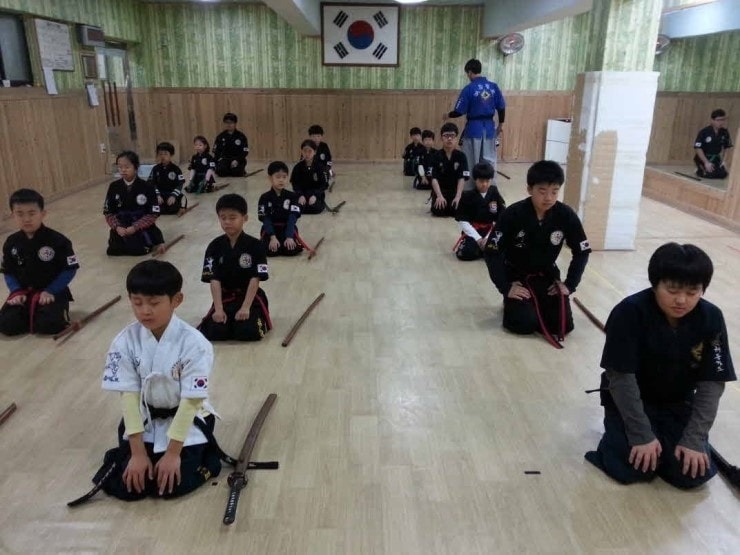
Haedong Kumdo History
Unveiling the Legacy of Korean Swordsmanship
Ancient Roots
Haedong Kumdo, often referred to as the “Korean way of the sword,” boasts a rich and storied history deeply rooted in the ancient traditions of Korea. The practice of swordsmanship in Korea can be traced back to the Three Kingdoms era (57 BC – 668 AD), where warriors honed their skills for both self-defense and battlefield combat.
Hwa Rang Warriors
During the Silla Dynasty, a group of elite warriors known as the Hwa Rang played a pivotal role in shaping the foundations of Korean martial arts, including swordsmanship. The Hwa Rang embraced a code of ethics that emphasized loyalty, courage, and honor – principles that continue to resonate in Haedong Kumdo today.
Influence of Buddhism
Buddhism, with its emphasis on discipline and mindfulness, further influenced the development of Korean swordsmanship. Monks practicing martial arts sought to achieve a harmonious balance of mind, body, and spirit, incorporating sword techniques into their training.
Joseon Dynasty and Swordsmanship Manuals
The Joseon Dynasty (1392–1897) marked a significant period for the codification and documentation of martial arts, including swordsmanship. Various manuals, such as the “Muyejebo” (Manual of Martial Arts), provided detailed instructions on sword techniques and forms, contributing to the formalization of Korean swordsmanship.
Modern Revival
In the 20th century, efforts to revive and preserve traditional Korean martial arts gained momentum. Masters like Na Han-il played a pivotal role in consolidating various sword techniques into a comprehensive system, laying the groundwork for what is known today as Haedong Kumdo.
Philosophy of Haedong Kumdo
Beyond the physical techniques, Haedong Kumdo embodies a philosophy rooted in balance, discipline, and respect. The yin and yang of the sword symbolize the duality of existence, teaching practitioners not only how to master the physical aspects of swordsmanship but also how to cultivate a harmonious and disciplined mindset.
Haedong Kumdo Today
Haedong Kumdo has evolved into a dynamic martial art that not only preserves the historical techniques of Korean swordsmanship but also adapts to the needs of contemporary practitioners. Embracing both the artistry and practicality of sword techniques, Haedong Kumdo continues to thrive as a cultural treasure.
Contact Us
Address : 2029 W Commonwealth Ave # A, Fullerton, CA 92833
Contact : (714)879-6655
 USA Tae Kwon Do